
Conservation of Caretta caretta
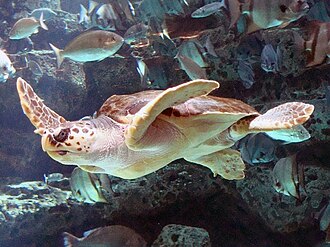
Caretta caretta are loggerhead sea turtles, also known as large-headed sea turtles. They live in warm seas and oceans around the world: the Mediterranean, Atlantic, Indian, and Pacific Oceans. The Turkish Mediterranean coast is one of the important places where they lay their eggs. The beaches of Antalya, Dalyan, Çıralı, and Gazipaşa are particularly well known.
Caretta caretta are very ancient animals. Their ancestors lived in the age of the dinosaurs. An adult turtle can reach around 70–120 cm in length and weigh between 80 and 200 kg. They have large heads and powerful jaws that allow them to crack open shells and crabs.
These turtles live for approximately 50–70 years, sometimes longer. However, they grow slowly and only reach adulthood at 20–30 years of age.
Every summer, females return to the beaches where they were born. At night they come ashore, dig a hole in the sand, and lay around 80–120 eggs. After 45–60 days, tiny hatchlings emerge from the eggs. They are very small — roughly the size of a palm. At night, the hatchlings instinctively run towards the sea, guided by the light of the moon and the reflection of the water.
But very few hatchlings survive to adulthood. They are threatened by birds, crabs, fish, plastic waste, fishing nets, vehicles on beaches, and artificial light from hotels and houses. Because of light pollution, hatchlings can lose their bearings and head towards roads or buildings instead of the sea.
This is why caretta caretta are listed in the Red Book and protected under international law. They are defended by organisations and agreements such as the International Union for Conservation of Nature (IUCN), the Bern Convention, and CITES, which prohibits illegal trade in rare animals. In Turkey, these turtles are also protected by the state, and many beaches are designated as special conservation zones.
Volunteers help protect the turtles during the nesting season.
They:
• find and mark nests;
• install protective enclosures around clutches;
• ensure people do not walk over the nests;
• inform tourists and local residents about the rules of behaviour on the beach;
• help hatchlings safely reach the sea;
• collect litter and plastic from the coastline;
• monitor the condition of beaches and report problems.
Thanks to the work of volunteers and ecologists, turtles have a greater chance of surviving and preserving their species for future generations.