
Green Turtle Conservation
The green sea turtle is one of the most well-known and beautiful sea turtles in the world. Its scientific name is Chelonia mydas. Despite its name, its shell is not always green — it can be olive, brown, or greyish. The name refers to the greenish colour of the fat beneath the shell.
Green turtles live in warm tropical and subtropical seas around the world. They can be found in the Mediterranean, Red Sea, Atlantic, Indian, and Pacific Oceans. The Turkish Mediterranean coast is also an important nesting site, particularly the beaches of Adana and Mersin.
They are among the largest sea turtles. An adult green turtle can reach up to 1.5 metres in length and weigh 150–250 kg. They are excellent swimmers and capable of travelling thousands of kilometres during migrations.
Green turtles live a very long time — around 60–80 years, sometimes even longer. Young turtles feed on small marine animals, while adults become primarily herbivorous, eating sea grass and algae. This helps maintain the health of marine ecosystems and underwater meadows.
Every summer, females return to the beaches where they were born. At night they come ashore and lay around 80–120 eggs in the sand. After a few weeks, tiny hatchlings emerge. They are extremely vulnerable: many fail to reach the sea due to predators, rubbish, artificial lighting, and human activity.
For many years, the green sea turtle was considered an endangered species. However, thanks to decades of work by ecologists, scientists, and volunteers, in 2025 the International Union for Conservation of Nature (IUCN) changed the global status of the species to "Least Concern". This was an important achievement in conservation.
But this does not mean that turtles no longer need protection. Some regional populations, including the Mediterranean one, remain vulnerable and are under observation. Green sea turtles continue to be protected by international agreements and the laws of many countries.
The main threats to green turtles are plastic waste, fishing nets, sea pollution, beach destruction, and climate change. Plastic in the water is particularly dangerous: turtles can mistake plastic bags for jellyfish and swallow them.
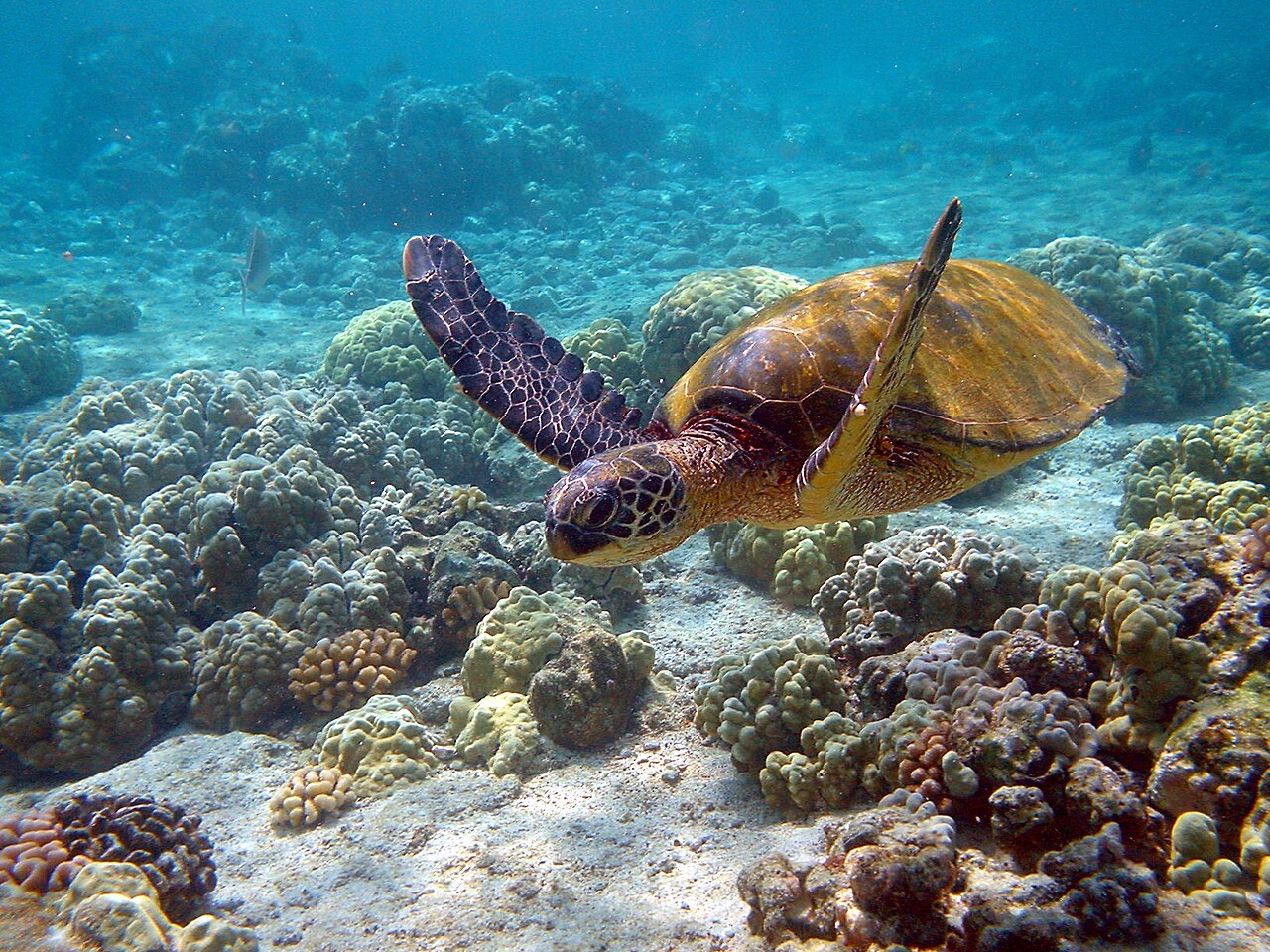
Volunteers help protect green turtles during the nesting season.
They:
• find and mark nests;
• protect clutches with special enclosures;
• keep beaches clean;
• help hatchlings safely reach the sea;
• tell people about the importance of protecting nature;
• conduct observations and collect data for scientists.
Thanks to the work of volunteers, ecologists, and caring people, green sea turtles have a better chance of preserving their populations and continuing to live in the seas of our planet.