
Sand Lily Conservation
The sand lily (lat. Pancratium maritimum) is a species of bulbous plant of the Amaryllidaceae family, growing on sandy sea shores along the northern and eastern coasts of the Mediterranean.
A unique feature of the sand lily is its property of withering completely after flowering, leaving only the mature seed capsules visible. Over time, these are pulled into the soil and covered by roots.
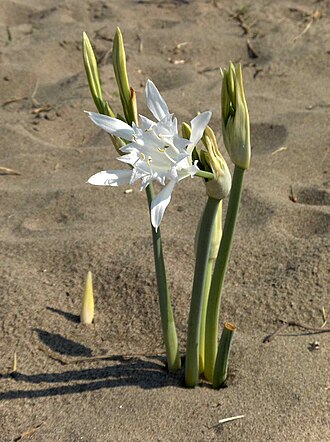
This rare coastal plant plays an important role in the ecosystem of sea beaches and easily disappears due to human activity. Main reasons:
The sand lily stabilises sand dunes and acts as a buffer protecting the shore from erosion by wind and water.
It is part of the natural coastal ecosystem and serves as a habitat for insects and other organisms.
The plant is very sensitive to trampling, construction, driving on beaches, and mass tourism.
In many regions the sand lily is considered a rare or protected species.
Due to flower collection and habitat destruction, its populations are declining.
In addition to its ecological value, the sand lily is also important as part of the natural Mediterranean landscape: its white flowers have become a symbol of clean and preserved beaches.
To conserve sand lilies:
Do not pick flowers or dig up bulbs. Even a single picked flower reduces the plant's ability to reproduce.
Restrict trampling of dunes. On protected beaches, wooden walkways and designated pedestrian zones are built.
Do not drive vehicles on the sand, as they destroy roots and young plants.
Preserve natural sand dunes and do not develop the coastline with hotels, roads, and parking areas.
Create protected nature areas and include the plant in Red Lists.
Carry out environmental education so that tourists know why coastal plants must not be damaged.